
Improve Google Rankings: SEO Tips and Strategies to Boost Your Visibility

To achieve sustainable success in Google search results, it is essential to establish a data-driven and repeatable optimization process rather than focusing solely on isolated ranking factors. At the heart of this approach lies the continuous analysis of relevant SEO metrics, the strategic development of targeted measures, and the consistent implementation and monitoring of results using modern tools such as Google Search Console or powerful web analytics platforms.
Only those who plan their SEO activities based on reliable data and respond flexibly to changes in user behavior, search intent, or algorithm updates can gain a lasting competitive edge. Both the improvement of content quality and the systematic elimination of technical weaknesses play a key role within this iterative optimization cycle. Such a systematic, data-driven SEO process makes it possible to identify opportunities and weaknesses at an early stage, react promptly, and strengthen one’s online presence in a sustainable and measurable way.
Staying on page 1 for the long term is possible. Do you necessarily need an SEO agency for that? No, if you are willing to take certain aspects into account. Yes, if you want to enjoy a more “carefree” approach.
Laying the Foundation: Understanding Google Ranking Factors and Assessing Your Current SEO Position
To build a strong foundation for successful Google rankings, it is essential to first understand the key factors that influence a website’s performance and then accurately assess your own site’s current SEO standing. Google evaluates websites based on numerous signals – most importantly content quality, user experience, page load speed, mobile friendliness, internal linking, and authority established through high-quality backlinks.
A detailed audit is the first step toward targeted optimization: With tools like Google Search Console, Google Analytics, or specialized SEO audit software, you can systematically analyze indexing status, search visibility, technical errors, and your most relevant traffic sources.
A structured SEO check should at minimum include the following points:
- Review of the robots.txt file and XML sitemap,
- Analysis of target keywords for rankings and search intent,
- Identification of duplicate content,
- Evaluation of mobile usability,
- Assessment of Core Web Vitals,
- Examination of internal links and crawl errors,
- Backlink audit to evaluate domain authority.
By continuously monitoring these metrics, weaknesses and opportunities can be identified early on, enabling timely action to boost performance. This creates a reliable foundation for securing long-term visibility in Google’s Top Ten and effectively expanding your online presence.
How Google Evaluates Websites: The Most Important Ranking Factors
Google uses a wide range of ranking factors to determine how relevant and high-quality a website is for specific search queries.
At the core of this evaluation lies content quality and freshness: Google favors comprehensive, well-researched, and unique content that precisely addresses user intent and provides real value.
Another decisive aspect is user experience: Fast loading times, a clear site structure, intuitive navigation, mobile optimization, and an appealing design all contribute to user engagement and dwell time on the website.
A site’s authority is strengthened by high-quality backlinks from trustworthy, topic-relevant domains – the more authoritative links point to a website, the more confidence Google places in it as a credible source.
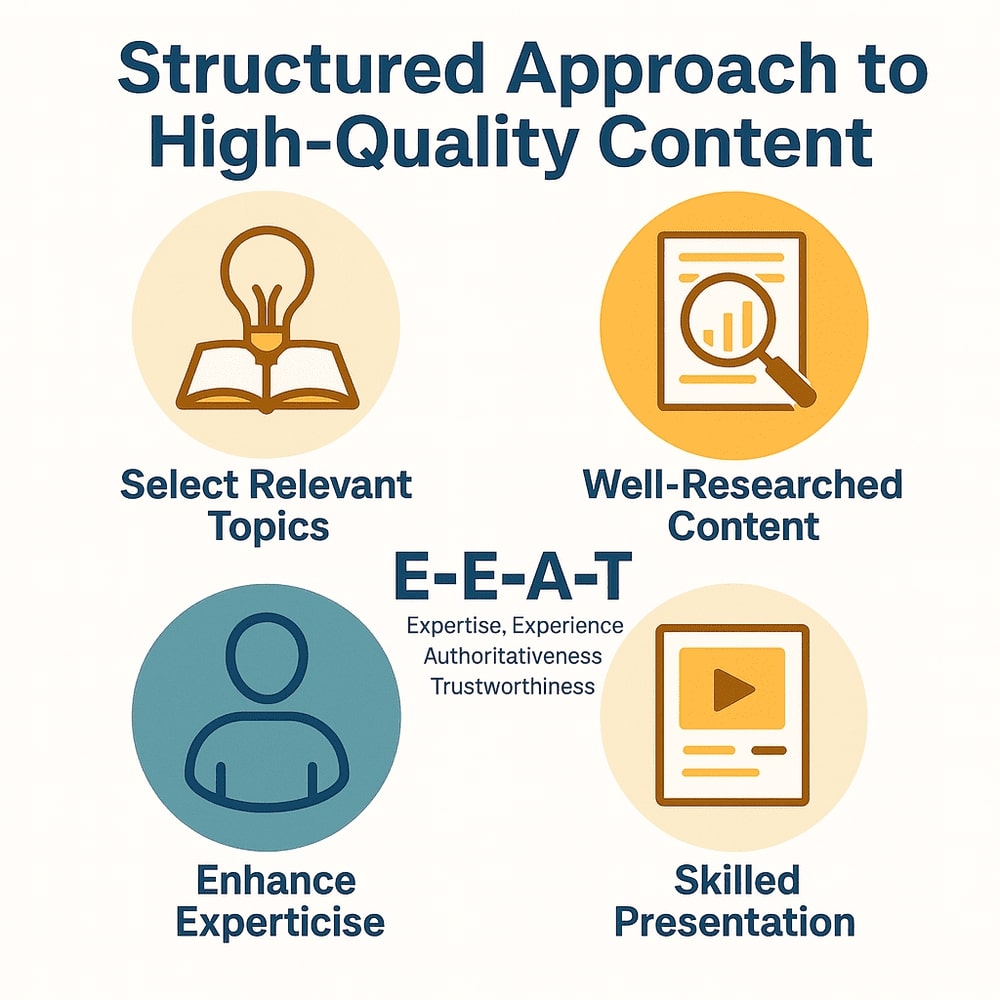
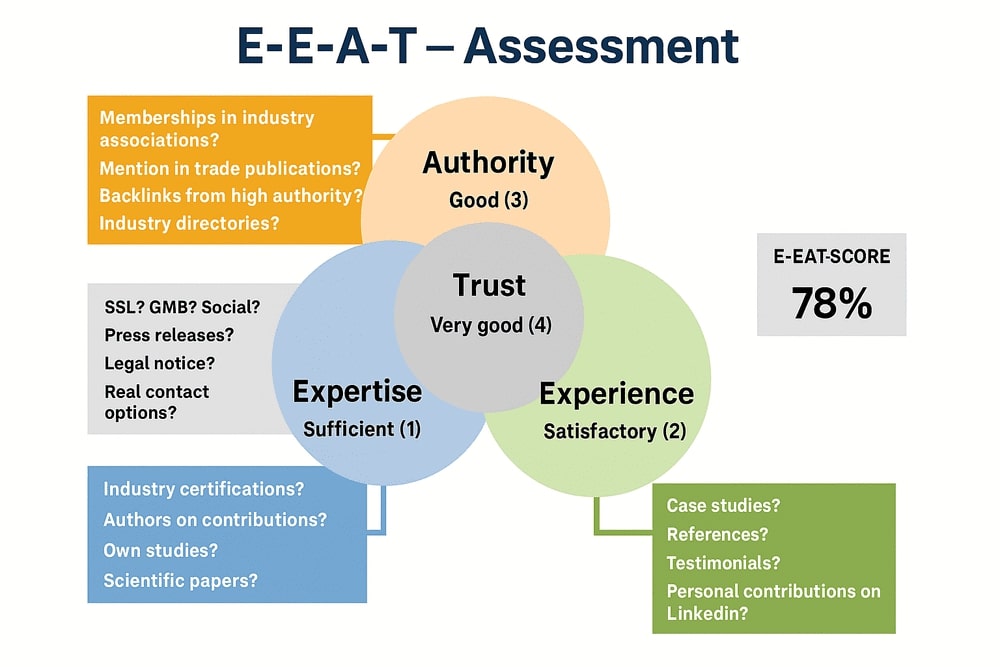
Additionally, the E-E-A-T principle (Expertise, Experience, Authority, Trustworthiness) is gaining importance: Content created by recognized experts, transparently backed up and regularly updated, is ranked higher. Technical factors such as secure encryption (HTTPS), flawless indexability, structured data usage (Schema Markup), and robust internal linking also play a critical role. Ultimately, it is the interplay of all these signals that leads Google to view a website as especially relevant, helpful, and trustworthy – rewarding it with top rankings.
User Intent and High-Quality Content: The Core of Successful Rankings
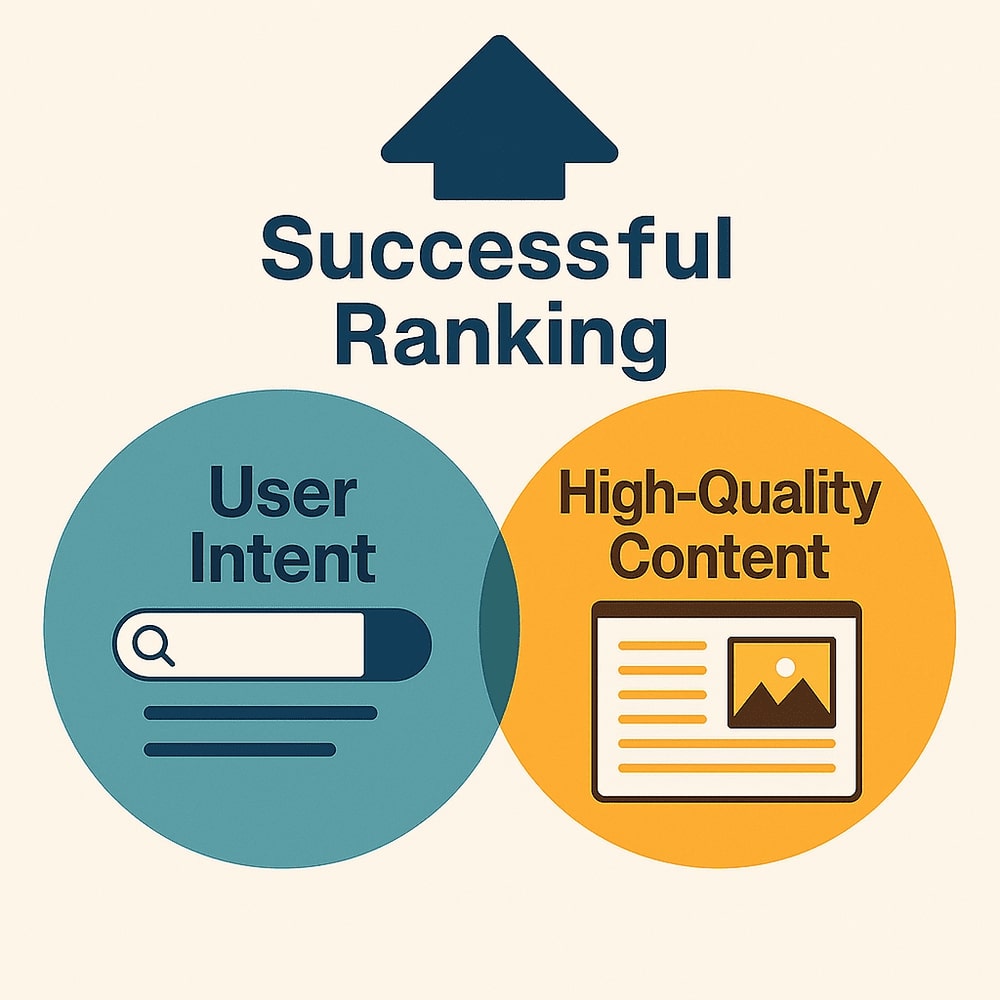
Achieving strong positions in Google search results today depends more than ever on delivering content that seamlessly aligns with user intent while meeting the highest quality standards.
At the heart of modern SEO strategies lies thorough keyword research that considers not only search volume but also the underlying user intent—whether informational, navigational, transactional, or commercial.
Successful websites excel at identifying this intent and translating it into tailored content formats: While information seekers are engaged with in-depth guides or how-to articles, users with a clear purchase intent expect structured product comparisons or persuasive landing pages.
To meet both SEO requirements and deliver genuine user value, a systematic content production process is recommended—one that includes topic research, semantic keyword analysis, adherence to E-E-A-T principles (Expertise, Experience, Authoritativeness, Trustworthiness), and ongoing performance monitoring.
Tools like Google Search Console, Google Trends, or professional keyword research platforms help uncover relevant terms and identify content gaps in your offering. A proven framework is to define the search intent for each core keyword, select suitable content formats, and prepare content that is user-centric, multimedia-rich, and technically flawless—for example, by integrating graphics, videos, FAQs, and internal linking.
Practical examples illustrate this: For the query “What is SEO?” beginner-friendly articles with infographics and glossaries are most effective, whereas for “SEO tools comparison,” detailed product comparisons and user reviews drive conversions.
Only by consistently aligning with user needs, creating high-value content, and continuously analyzing data and user feedback can sustainable top rankings be achieved and your website’s visibility steadily increased. Equally important is keeping content up to date to respond to new trends and algorithm changes, ensuring ongoing relevance.
Another success factor is the strategic placement of target keywords in headings and meta tags, helping search engines understand the content focus and boosting click-through rates in search results. Competitor analysis provides valuable insights into how to refine your own content and align it more precisely with your audience. Interactive elements such as polls, tools, or comment-enabled sections further enhance user engagement, increase dwell time, and signal to Google the value of your site.
Ultimately, it is the combination of compelling content, SEO expertise, and technical optimization that positions your website prominently in organic search and generates lasting, high-quality traffic. As Google’s algorithms increasingly emphasize user signals and content quality, attributes such as freshness, originality, and relevance are becoming ever more important. The most successful websites integrate in-depth analysis, real-world experience, expert opinions, and multimedia formats like videos or infographics, thereby meeting diverse user needs while sending additional ranking signals.
Those who consistently focus on high-quality content and ongoing optimization will see domain authority rise, achieve stronger rankings, and secure a competitive edge.
Keywords and Search Intent: More Than Just Finding Search Terms
Effective keyword research today goes far beyond simply identifying as many high-volume search terms as possible. The real key lies in precisely uncovering the user intent behind each query in order to create tailored, truly relevant content.
To achieve this, it is advisable to incorporate long-tail keywords and semantically related terms, as they often address deeper user needs while facing less competition.
Modern keyword tools such as
- Google Keyword Planner,
- Answer the Public, or
- Semrush
help systematically capture questions, challenges, and topics related to a search term and reveal thematic connections. A particularly effective approach is to cluster search queries into the following types:
- informational,
- navigational,
- transactional, and
- commercial
By doing so, you can define the specific intent for each keyword and align your content accordingly. Be sure to also account for seasonal fluctuations and regional specifics when developing keyword strategies for local audiences. Regularly analyzing search results for your most important keywords and comparing competitor content will reveal which content formats best match user expectations.
Only a well-thought-out keyword strategy that considers both search intent and existing content gaps enables you to cover relevant topics, systematically increase your website’s visibility, and achieve sustainable growth in Google rankings.
As part of our free potential analysis, we create an E-E-A-T profile combined with a detailed evaluation and assessment of your authority.
Content Optimization: Perfecting Text, Multimedia, and Structure
To make content truly effective for both search engines and users, it is essential to optimize every component with precision.
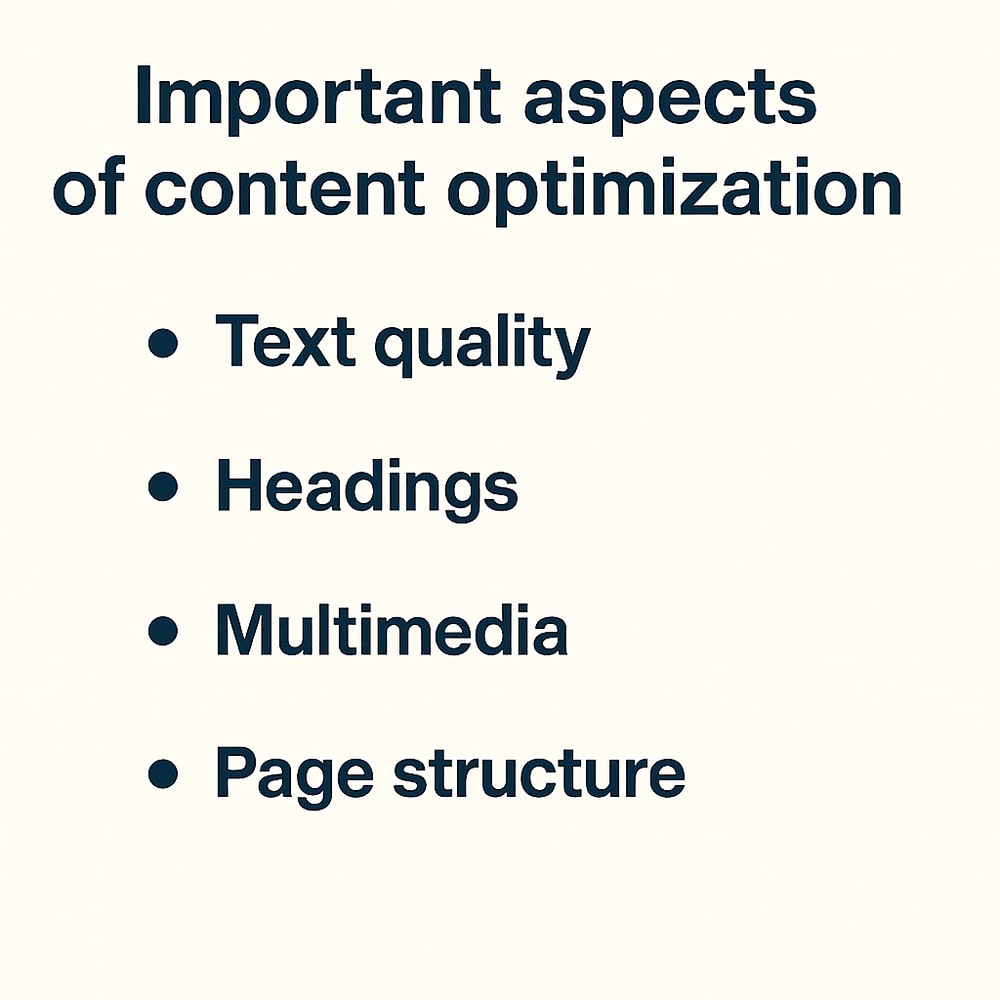
Start with text quality: Craft clear, structured, and well-researched copy that naturally incorporates relevant keywords without falling into the trap of keyword stuffing.
Headings such as H1, H2, and H3 should not only reflect the topic of each section but also include core search terms, as they provide Google with crucial signals about your page structure.
Enhance your content with engaging graphics, optimized images with descriptive alt attributes, and videos to appeal to different learning styles and increase dwell time on your site—something Google interprets as a positive user signal that can significantly improve your ranking. Additionally, ensure logical structuring with paragraphs, bullet points, tables, and prominent calls-to-action so mobile users can navigate intuitively. Interactive features such as FAQ sections, calculators, or polls encourage engagement and strengthen user retention.
Technical aspects of content optimization are equally important: lightweight image files for faster loading times, semantic HTML, and a clear internal linking strategy are indispensable for boosting indexability and ensuring SEO success. Ultimately, it is the combination of well-crafted text, high-quality multimedia, and a clean page structure that creates an outstanding user experience—one that improves both your search rankings and your brand perception over the long term.
Technical SEO & On-Page Optimization: For Maximum Visibility and Performance
Technical SEO and on-page optimization are the foundation for achieving maximum visibility and long-term success in Google’s search results.
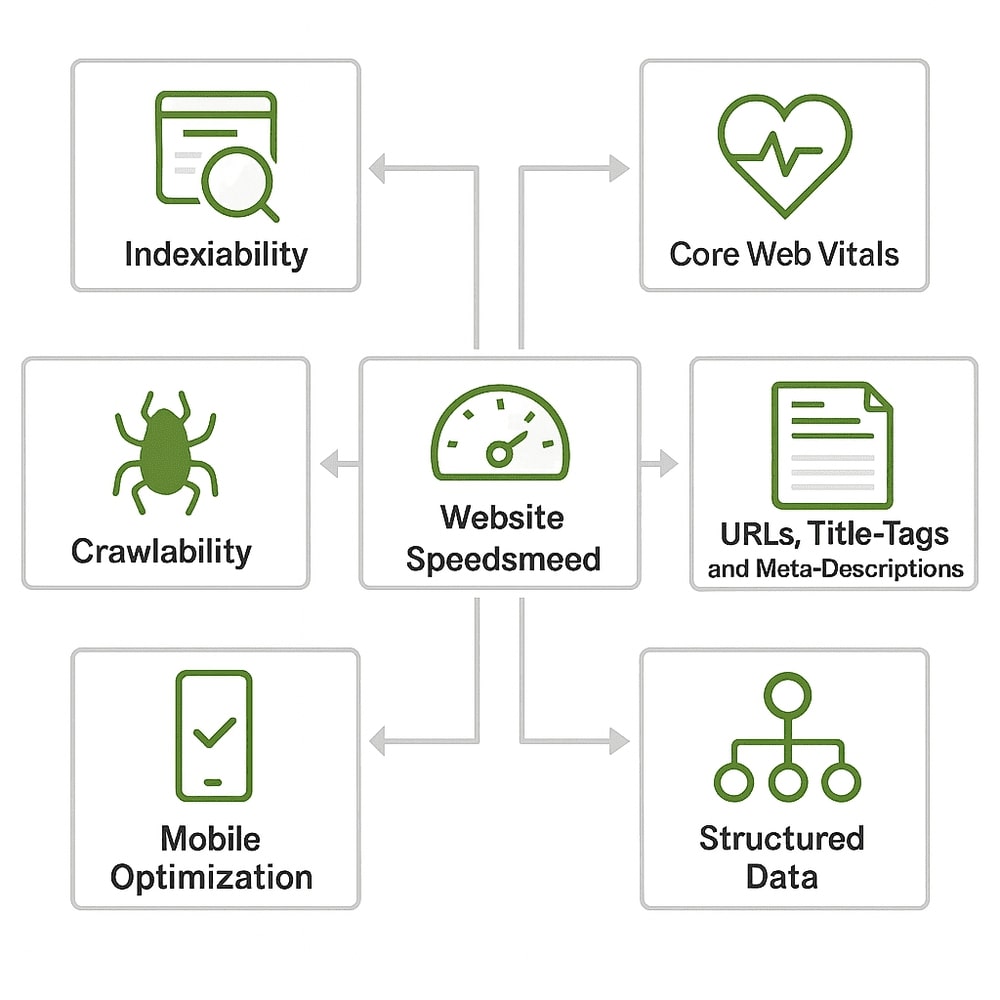
A key focus lies in identifying and fixing technical barriers that prevent Googlebot from reliably crawling and indexing your content. The most important measures include correctly configuring the robots.txt file, setting up a complete XML sitemap, and using canonical tags to avoid duplicate content. The best approach is to proceed step by step:
- First, check whether your robots.txt accidentally excludes important pages, generate and submit an up-to-date sitemap in Google Search Console, and ensure through the targeted use of canonicals that Google always recognizes the preferred page version. Screenshots from common tools such as Screaming Frog, Yoast SEO, or the Google Search Console interface can help visualize common pitfalls and illustrate correct implementation.
- In the on-page area, pay close attention to optimizing meta tags—especially title tags and meta descriptions—as they are crucial for improving the click-through rate (CTR) of your search results.
- At the same time, search-engine-friendly URLs, a clear page structure, and strategically placed internal links increase the relevance of your landing pages and make it easier for search engines to understand your website.
- Modern technical SEO also includes consistent optimization of the Core Web Vitals (LCP, FID, and CLS) to provide a positive experience for both users and Google. This can be achieved through fast hosting environments, optimized image sizes, asynchronous script loading, and minimizing unnecessary resources. Monitoring and analyzing load times with tools such as Google PageSpeed Insights or Lighthouse helps you continuously identify weaknesses and address them effectively.
- Another priority should be mobile optimization, as Google evaluates all websites within the framework of mobile-first indexing. This means your content must not only display correctly on mobile devices but also deliver outstanding performance in terms of loading speed and usability. Regularly test your mobile site with Google’s Mobile-Friendly Test, ensure responsive design, and avoid disruptive elements like intrusive pop-ups or buttons that are too small.
It is only through the combination of technical best practices and consistent user-focused optimization that you can secure maximum SEO success and build the foundation for steadily improving rankings and visibility—regardless of future algorithm updates.
Indexability and Crawlability: Guiding Google the Right Way
For your website to appear in Google search results, targeted control of indexability and crawlability is essential. The robots.txt file acts as a guide for Googlebot and other search engine crawlers by defining exactly which areas of your site should be crawled and which should be excluded from indexing.
A well-configured robots.txt protects sensitive or irrelevant content, prevents unnecessary server load, and ensures that your crawl budget is used effectively for important pages. In addition, an up-to-date XML sitemap helps Google quickly discover and correctly index all key pages of your website. It essentially serves as a table of contents for search engines and should be updated regularly to reflect new or removed content.
Equally important are meta tags such as “noindex” or “nofollow.” These allow you to specifically exclude individual pages from indexing or from passing on link authority—for example, in the case of duplicate content, internal search results, or archived content. Regular checks in Google Search Console help identify and resolve indexing issues at an early stage. Errors such as accidentally blocked main pages or forgotten “noindex” directives can quickly lead to important content not being indexed or valuable rankings being lost.
By consciously managing crawlability and indexability, you ensure that Google can effectively capture and evaluate your website’s most valuable content—an essential prerequisite for sustainably improving your visibility in search rankings.
Optimizing Website Speed and Core Web Vitals
A fast website is a crucial ranking factor and forms the foundation of an excellent user experience. The so-called Core Web Vitals—Largest Contentful Paint (LCP), First Input Delay (FID), and Cumulative Layout Shift (CLS)—measure key aspects of page speed and interactivity that Google uses to assess overall page quality.
To improve LCP, focus on optimized image sizes, fast server response times, and efficient caching so that your website’s main content becomes visible to users as quickly as possible.
FID can be reduced by minimizing JavaScript files, loading render-blocking scripts asynchronously, and eliminating unnecessary resources—ensuring your site responds instantly to user input.
To lower CLS, define fixed dimensions for images and other media elements and avoid layout shifts caused by late-loading ads or dynamic content.
Use tools like Google PageSpeed Insights, Lighthouse, or WebPageTest to identify concrete optimization opportunities and regularly track the success of your improvements. Also, make sure to bundle and compress CSS and JavaScript files to reduce transfer times, and implement a Content Delivery Network (CDN) to optimize loading speeds worldwide.
By continuously monitoring and enhancing performance, you ensure that your website not only meets Google’s technical requirements but also delivers a consistently strong user experience—an invaluable signal for better rankings and greater visibility in search results.
Further information on Core Web Vitals can be found here.
Mobile Optimization: A Priority in Today’s Mobile-First World
Mobile optimization has long since shifted from a nice-to-have to an indispensable success factor in modern SEO, as Google’s “mobile-first indexing” primarily evaluates the mobile version of a website for ranking purposes. To ensure optimal display and functionality of your website on smartphones and tablets, you should rely on responsive web design: this adapts layouts flexibly to different screen sizes, guaranteeing a consistent user experience across all devices.
Equally important is optimizing mobile page speed, since users expect fast load times even on the go. Image files should be compressed, resources bundled, and unnecessary scripts avoided. Regularly test your site with Google’s Mobile-Friendly Test and PageSpeed Insights to confirm that mobile users see a flawless version of your website and can easily access essential functions such as navigation, search fields, and call-to-action elements. Ensure that fonts, buttons, and interactive elements are large enough for intuitive usability, and avoid intrusive pop-ups or other disruptive components that could harm the user experience.
It can also be worthwhile to evaluate AMP (Accelerated Mobile Pages) or comparable technologies if ultra-fast load times are a priority. Be sure to fully integrate structured data into the mobile version as well, so that Google’s crawlers can optimally capture your content. With consistent mobile optimization, you maximize reach, reduce bounce rates, improve your Google rankings, and deliver a compelling brand experience on the go.
Internal Linking: Strategically Guiding Structure and Authority
A well-planned internal linking strategy is essential for sustainably improving both usability and Google rankings. By purposefully connecting important content, you not only help users find relevant information more quickly but also direct so-called link authority—essentially the distribution of PageRank—toward strategically important pages. Start with a clear hierarchical structure where main topics, subpages, and key landing pages build logically on each other.
Place internal links contextually within body text or in dedicated navigation elements, using descriptive, keyword-based anchor texts that are understandable for users and interpretable for search engines. Maintain balanced linking to ensure no page has too many or too few links; excessive clustering can appear unnatural and hinder indexability just as much as missing links.
Linking to “power pages”—high-quality, high-traffic, or conversion-relevant content—is particularly critical for boosting rankings of competitive core keywords. In addition, use overview pages, thematic hubs, or regularly updated content as entry points for internal linking to guide user flow strategically across your website. Monitor the effectiveness of your internal linking with SEO audit tools to identify broken links, analyze linking patterns, and uncover optimization opportunities early.
A consistent, user-focused internal link structure helps increase dwell time, reduce bounce rates, and support Google in optimally crawling and evaluating all of your important content. In this way, you strengthen visibility and build a robust, structured online presence for the long term.
URLs, Title Tags, and Meta Descriptions: Designing for Maximum Impact
Effective optimization of URLs, title tags, and meta descriptions is critical for significantly increasing both search visibility and click-through rates. Start with search engine-friendly URLs: they should be short, concise, and easy to understand, contain relevant keywords, and avoid unnecessary special characters or parameters.
A clear URL structure makes it easier for both users and search engines to correctly categorize the content of your site, strengthening your Google ranking. When writing title tags, ensure the primary keyword appears as early as possible while also highlighting the benefit for searchers—attractive yet authentic titles improve user willingness to click.
Title tags should be unique for each page and ideally stay within 50–60 characters so they display fully in search results. For meta descriptions, focus on persuasive, action-oriented wording that integrates relevant keywords, highlights your unique value proposition, and includes a clear call-to-action.
While meta descriptions are not a direct ranking factor, they significantly influence click-through rates by helping users better understand your search result. Use a maximum of 155–160 characters to ensure full display across devices. Although there’s no hard limit, keeping descriptions concise is best practice.
Regularly analyzing and optimizing these elements with tools like Google Search Console helps you uncover opportunities to increase visibility and user engagement. Those who research systematically, use strategically, and continuously adapt URLs, title tags, and meta descriptions to search trends and user expectations create the best conditions for top rankings and sustainable SEO success.
Structured Data (Schema Markup): Adding More Context for Google
Structured data—or schema markup—is a key tool for providing Google and other search engines with additional context about your website content. Using standardized tags, for example from the Schema.org vocabulary, you can embed structured data into your site’s HTML.
This makes it clearer to search engines what a given page is about—whether it’s a product, service, recipe, or company location. Google uses structured data to enrich search results with advanced features, known as rich snippets. Examples include rating stars, prices, recipe instructions, event details, or FAQs displayed beneath the standard search listing. These enhanced results boost visibility, increase click-through rates, and give you a significant competitive advantage in organic search.
Implementation is usually done with simple JSON-LD scripts, though Microdata and RDFa are also recognized by search engines. A key benefit of structured data is that it not only clarifies content relevance but also increases the likelihood of being included in voice search results and Google features such as the Knowledge Graph or Featured Snippets.
In practice, you should regularly test your markup with Google’s Rich Results Test to ensure proper functionality and detect errors. Only use structured data for content that actually exists on your site, as misleading markup can lead to manual penalties. Those who use schema markup strategically and correctly can differentiate their content, make crawling easier for Google, and significantly improve their chances for top rankings and modern, eye-catching search result displays.
Helpful resources include:
Off-Page SEO and Authority Building: External Signals for Your Ranking
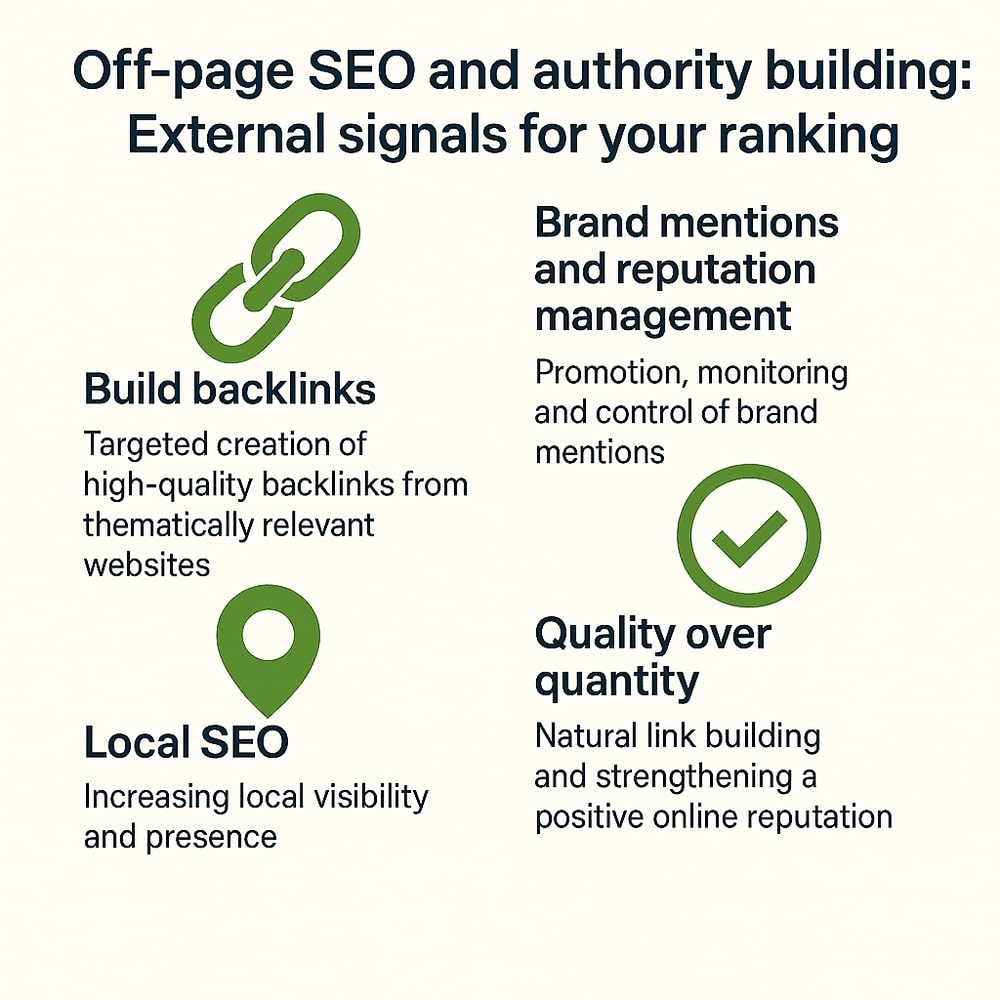
To achieve lasting success in Google rankings, an optimized website alone is not enough—external signals play a decisive role in showing Google the authority, trustworthiness, and relevance of your domain. Among these off-page factors, building high-quality backlinks from thematically relevant and authoritative websites remains one of the most important ranking factors in the algorithm.
In addition, brand mentions—references to your brand without an actual link—and the strategic cultivation of a positive online reputation are becoming increasingly important. They signal to Google that your brand is established, credible, and relevant in the marketplace, which has a positive impact on your site’s E-E-A-T profile. When building links, focus exclusively on natural, organically growing backlinks by producing high-quality, unique content that others are eager to share and recommend. This approach minimizes the risk of Google penalties caused by unnatural link patterns.
A structured decision-making model can help you evaluate new link sources: Assess each potential source for topical relevance, domain authority (e.g., measured by Moz Domain Authority or Ahrefs Domain Rating), resistance to spam and manipulation, and alignment with your own quality and ethical standards. Avoid purchased, automated, or network-based backlinks at all costs. Sustainable link building relies instead on validated partnerships, guest contributions, earned PR, or collaborations with industry experts.
Regularly audit your backlink profile for toxic links, and if necessary, use Google’s Disavow Tool to neutralize potential negative signals early. Beyond international and industry-spanning backlinks, local businesses should also focus on building local citations and directory profiles in relevant business listings to maximize visibility for local searches.
Reputation management should also be systematically monitored: Proactively respond to reviews and mentions on social media, directories, and industry platforms, and foster positive discussions around your brand.
Monitoring and analysis tools such as Google Alerts, Mention, or Brandwatch enable you to continuously track brand mentions and backlinks, identify new opportunities, and react quickly to negative developments.
Complement this with targeted campaigns to secure mentions of your brand in trade media, press releases, or podcasts in order to expand media presence and strengthen trust signals.
Consistently maintaining and transparently growing your external signals gives you sustainable advantages in Google rankings, enhances brand perception, and protects against sudden ranking losses due to algorithm updates. This is the only way to build a strong, trustworthy, and competitive online presence that resonates with both your target audience and search engines alike.
Building Backlinks: Quality Over Quantity
Backlinks remain one of the strongest Google ranking factors and can significantly increase your domain authority and website visibility. However, when building backlinks, quality always outweighs quantity: A single high-quality link from a thematically relevant, authoritative website has a far greater positive impact on your Google ranking than dozens of low-quality or even spam-like links.
Start with a thorough analysis of potential link sources by assessing their topical relevance, domain authority, and backlink profile using tools such as:
A proven strategy is to create exclusive content such as studies, whitepapers, or comprehensive guides that other websites naturally want to reference and link to. Guest posts on reputable industry platforms, as well as active participation in expert networks and conferences, offer additional opportunities to generate organic backlinks. Equally important is building natural, long-term relationships with influencers and opinion leaders in your niche—leading to recommendations via podcasts, interviews, or industry-specific discussions.
Avoid buying or exchanging backlinks under any circumstances, as Google strictly penalizes these practices, which can severely jeopardize your rankings. The continuous development of relevant backlinks—combined with technical SEO and high-quality content—forms the foundation for long-term SEO success and helps you establish a strong presence in the top ten of search results.
Learn more about link building here.
Link building has evolved with E-E-A-T. Discover the most important aspects in this article: t3://page?uid=60793
Brand Mentions and Reputation Management
Brand mentions and effective reputation management are playing an increasingly central role in both Google rankings and how your website is perceived.
While traditional backlinks send a clear ranking signal, Google also considers brand mentions—references to your brand name without a direct link—when evaluating relevance, visibility, and trustworthiness.
Professional online reputation management therefore involves not only continuously monitoring mentions on social media, industry portals, forums, or review platforms, but also actively shaping your brand image through targeted communication and direct interaction with your audience. By responding quickly to feedback, complaints, or critical press coverage, you build trust with potential customers and demonstrate to both search engines and users your competence in handling challenges. Use monitoring tools such as Google Alerts or Brandwatch to identify brand mentions in real time, spot opportunities for outreach or clarification, and proactively respond to both positive and negative developments.
Beyond monitoring, building positive brand mentions should be a core part of your PR and content marketing strategy—for example, by sharing success stories, authentic customer reviews, expert contributions, or partnerships with trusted industry platforms. Positioning your brand in industry-specific discussions, podcasts, and media coverage further increases visibility and sends valuable reputation signals to Google.
Ultimately, consistently nurturing your brand identity leads not only to stronger user engagement but also to sustainably higher rankings in Google and a secure position as a trusted authority within your niche.
![[Translate to English:] Local SEO](/fileadmin/user_upload/blog/platz-1-in-google/local-seo.png)
Local SEO: Visibility for Businesses with a Physical Location
Local SEO is a powerful lever for businesses with a physical location to gain targeted visibility in Google’s local search results and attract potential customers in their immediate area.
At the core of successful local search optimization is a complete and optimized Google My Business profile. This should include all relevant business details such as name, address, phone number (NAP data), opening hours, and meaningful categories, as well as high-quality images and regular updates.
User reviews and actively responding to questions and feedback play a central role in building trust and sending positive signals to Google.
It is also recommended to build local citations in reputable directories, review platforms, and regional listings. Consistent mentions of your NAP data across as many trustworthy sources as possible strengthen local relevance and help Google clearly associate your business location.
Location-specific content—such as dedicated landing pages for branches, regional news updates, or local offers—further increases your chances of ranking well for local queries.
Strategic use of structured data (e.g., LocalBusiness schema), mobile optimization, and integration of Google Maps or local route planners also make it easier for customers to find your business quickly.
Continuous performance monitoring with Google Search Console and specialized local SEO tools helps track visibility and systematically expand improvements. Companies that consistently apply these local SEO principles not only increase their chances of top placements in Google’s Local Pack but also attract a steady stream of nearby customers—ensuring strong positioning in the local competitive landscape.
Measurement, Analysis, and Iteration: The Continuous Optimization Process
Sustainable SEO success is never a coincidence—it is the result of a carefully managed, data-driven, and continuous optimization process. Measuring, analyzing, and iteratively improving your SEO strategy forms the foundation of every effective action plan. The starting point is always a deep evaluation of your key performance indicators (KPIs) in Google Search Console and leading web analytics tools such as Google Analytics, Matomo, or Adobe Analytics. Important KPIs such as clicks, impressions, average position, click-through rates (CTR), and other user signals provide the basis for identifying weaknesses and uncovering optimization opportunities early on.
For example, a high number of impressions combined with low clicks indicates that your title tag and meta description may not be compelling enough, while stagnating keyword rankings may point to content issues or technical problems such as faulty indexing, slow-loading pages, or duplicate content. Fluctuations in the ranking of key keywords should always prompt a closer look at competitor content, backlink profiles, and recent changes in Core Web Vitals—such as load time, interactivity, and visual stability—to proactively adapt.
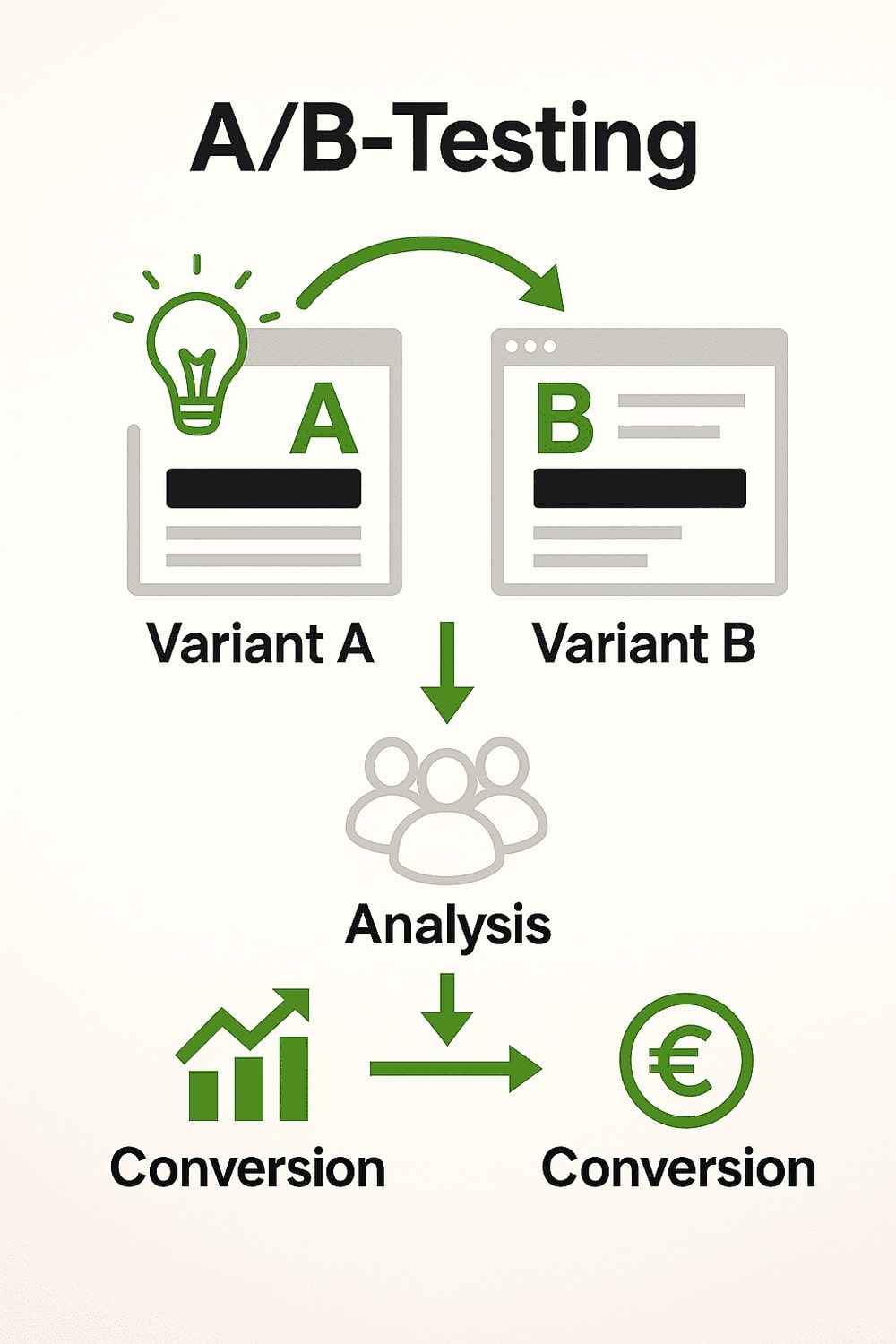
Ongoing reporting on traffic sources, user behavior, bounce rates, and conversions makes it possible to identify trends and patterns in visitor flows at an early stage. This requires detailed analysis of user segments, entry pages, and corresponding conversion paths to strengthen valuable traffic sources and remove potential obstacles in the user journey. A/B testing is a particularly effective tool for comparing the impact of changes to headlines, visuals, calls-to-action, or page structures in real-life scenarios, enabling data-driven decisions. Systematic evaluation of test results provides valuable insights for conversion optimization and helps refine SEO measures even further.
Beyond measurement, the iterative process must constantly adapt to new developments. Google algorithm updates, changes in search behavior—such as the rise of voice search and AI-driven queries—and evolving user intent require regular reviews and adjustments to your strategy. Regularly evaluate the keywords your site is visible for and align your content with updated search intent and relevant semantic phrases. Based on deeper data insights, you may also need to expand your content offering, strengthen technical foundations, or build targeted backlinks to strategically important pages.
Typical scenarios and tailored responses create a structured yet flexible approach: High bounce rates and short session durations should prompt a critical review of content and UX, followed by targeted improvements such as clearer navigation, relevant multimedia elements, or better page structure. Fluctuating rankings for individual keywords may require competitor analysis or technical audits to uncover causes in backlink strategies, Core Web Vitals, or market activity. A significant rise in organic visibility paired with persistently low conversions is often a warning sign that, although relevant traffic is being generated, the landing pages are not fully aligned with user intent. In such cases, benchmark competitor landing pages, adjust content to match search intent, and leverage direct user feedback through interaction tracking or surveys.
The key success factor: Stay agile, rely on regular iterations, and continuously test new measures in small steps. Document and evaluate all changes to identify success factors and replicate them across other areas when appropriate. Only in this way will your SEO strategy become scalable, resilient to market shifts, and consistently more effective—because your actions are data-driven and goal-oriented. Continuously improving visibility, technical excellence, and understanding of user needs through data-driven work is the foundation for consistently ranking in Google’s top ten and ensuring that SEO measurably contributes to your business success.
Deep-Diving into Google Search Console: Unlocking Opportunities
For experienced SEO managers, Google Search Console is an indispensable tool for identifying your website’s untapped potential and leveraging it strategically. Beyond the basic statistics, advanced usage allows for in-depth keyword performance analysis:
You can see which queries your pages appear for most frequently, which achieve high click-through rates (CTR), and where there is optimization potential—such as by refining title tags, meta descriptions, or strategically expanding content. By filtering data by pages and keywords, you can also uncover keyword cannibalization, enabling you to adjust content so that pages complement each other instead of competing, while aligning strategically with the most relevant search terms.
Indexing issues are another critical area: Search Console shows you exactly which pages are indexed, where errors exist—such as accidental “noindex” tags, robots.txt blockages, or incorrect canonical tags—and for which URLs Google encounters crawling difficulties.
By monitoring indexing reports regularly, you can resolve technical issues quickly and prevent valuable content from disappearing from search results due to misconfigurations.
Search Console also provides detailed metrics on Core Web Vitals—page load speed, interactivity, and visual stability. These allow you to instantly spot technical performance issues and implement targeted improvements to meet Google’s user experience standards.
User behavior and engagement signals, such as high exit rates or short dwell times on certain pages, provide key insights into where content or page structure needs refinement. Advanced users should also regularly use the URL Inspection Tool to check the indexing status of new or updated content, review crawl warnings, and submit individual pages for indexing.
When combined with segmentation by device type, country, language, or search type, you gain a comprehensive view of how your website performs across different touchpoints, enabling you to identify targeted opportunities to increase visibility. Ultimately, with consistent, in-depth analysis, Google Search Console becomes the innovation engine of your SEO efforts—making trends visible, uncovering weaknesses, and laying the foundation for data-driven, prioritized optimizations.
Web Analytics: Understanding and Optimizing User Behavior
To analyze user behavior on your website and identify optimization opportunities, modern web analytics tools such as Google Analytics, Matomo, or Adobe Analytics are indispensable.
These tools provide detailed insights into key metrics such as session duration, bounce rates, conversion rates, user journeys, and the most popular entry or exit pages. By evaluating this data, you gain a clear understanding of which content resonates with your target audience and where users drop off or lose orientation. A key practice is the systematic tracking of defined goals (conversions) to determine how effectively your pages drive desired actions—such as completing a contact form or finalizing a purchase.
Regularly analyze which channels (organic, direct, social, or referral) bring visitors to your site and identify valuable traffic sources to further expand. User behavior also reveals whether internal linking is logically structured and calls-to-action are well placed, or whether adjustments are needed to improve navigation. Identifying pages with high exit or bounce rates allows you to address content or usability bottlenecks—by adding additional information, clearer structures, or multimedia elements that increase engagement. Segmenting data by device type, region, or user group helps you better understand the unique needs of different audiences and optimize the overall experience accordingly.
With data-driven adjustments to content, navigation, and conversion elements, you can continuously adapt your website to visitor needs, increase dwell time, and ultimately boost the likelihood of users achieving your online business goals. Continuous use and interpretation of web analytics results fosters an iterative improvement process—an essential step for sustainably enhancing visibility, usability, and SEO success, while securing your position in Google rankings over the long term.
A/B Testing and Conversion Optimization for SEO
A/B testing is an indispensable tool for successful conversion optimization in SEO, as it enables you to systematically test individual page elements and evaluate their impact on user behavior and conversion rates based on data. By running variations of headlines, calls-to-action, forms, or content sections against each other, you can identify which versions resonate best with your audience—boosting both engagement rates and conversion likelihood.
High-traffic landing pages, in particular, benefit from continuous optimization, since even small adjustments can lead to significant increases in click-through rates or generated leads. SEO-relevant elements such as meta descriptions or structured data can also be tested through A/B experiments, helping to not only grow organic traffic but also improve actual goal completions. Convenient tools like Google Optimize, Optimizely, or VWO make it easy to set up, monitor, and precisely analyze test outcomes.
By complementing your analysis with user flow evaluations and heatmaps, you gain a complete picture of how changes affect both rankings and user interactions. A well-structured testing program is therefore essential for continuously refining your content offering, systematically removing conversion barriers, and making your website measurably more successful. In the long run, you benefit from both improved rankings and significantly higher conversion rates, as your site becomes increasingly tailored to the real needs and expectations of your users.
Adaptation and Future Strategies: Ensuring Lasting Success
In today’s rapidly evolving search landscape, continuously adapting your SEO strategy is critical to maintaining stable top rankings and staying competitive. Google is constantly updating its algorithms, with new updates regularly challenging established best practices. This makes it essential to align your efforts early with Google’s latest recommendations while continually reassessing your audience’s search intent. Particularly promising right now are developments such as the integration of artificial intelligence into search (AI Search) and the growing prevalence of voice-based queries (Voice Search).
To respond effectively to these trends, it is advisable to optimize your content for natural, longer search phrases and conversational keywords, as well as to implement schema markup and structured data that help Google better understand the context of your content. In addition, user experience is becoming an increasingly decisive ranking factor—especially aspects such as load times, mobile performance, and interactivity, which demand not only technical excellence but also a consistent focus on usability and customer experience.
By proactively monitoring emerging SEO trends, investing in ongoing team training, and testing innovative content formats or micro-interactions, you maintain the flexibility needed to succeed. An agile, data-driven approach that regularly analyzes search trends, user needs, and algorithm updates allows you to anticipate changes, respond strategically, and continuously align your website for sustainable ranking success. Businesses that consistently invest in evolution and innovation build a strong, future-proof online presence—remaining relevant to both Google and users in the long run.
Common Mistakes That Hinder Sustainable Ranking Growth and Strategic Measures for Long-Term Success
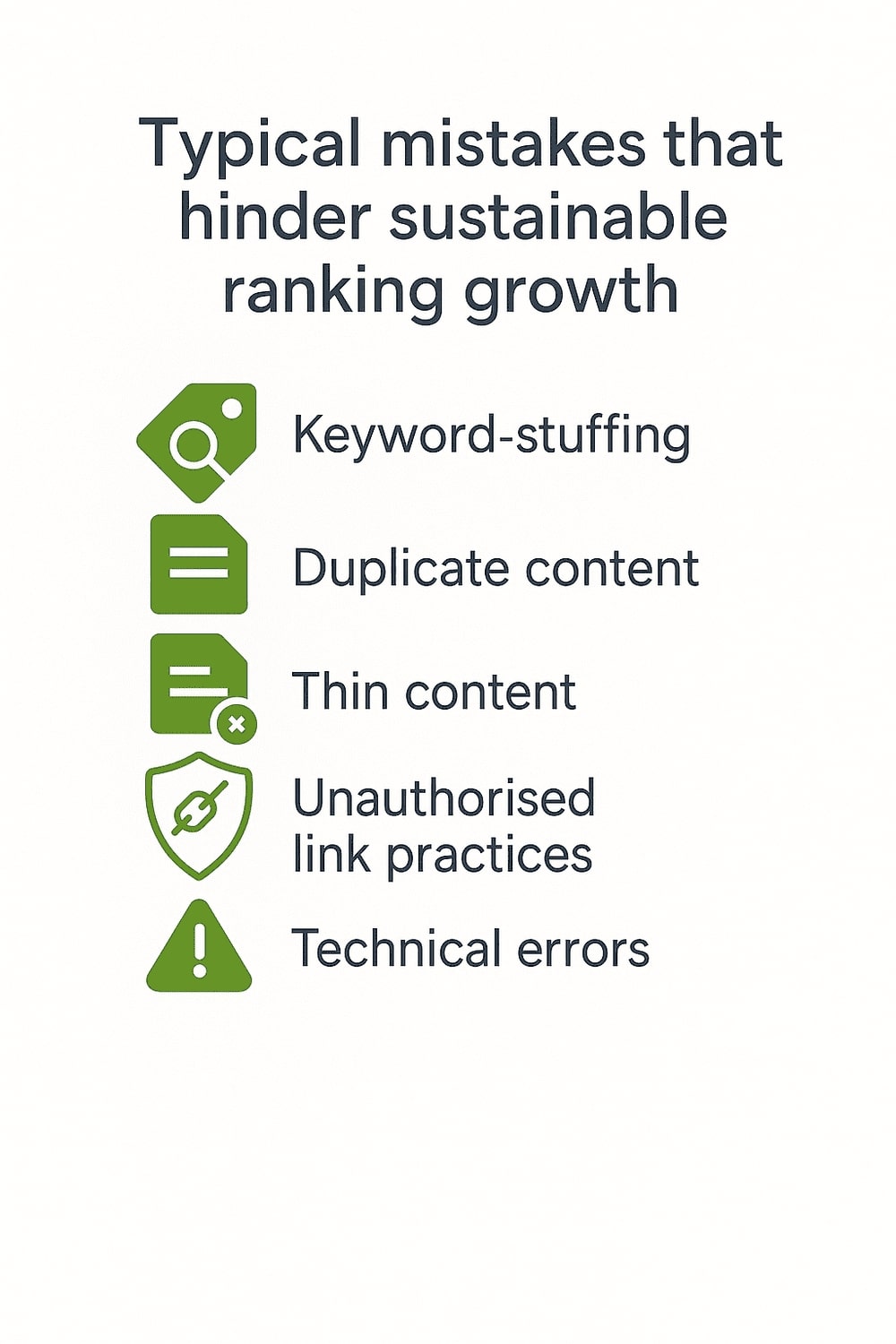
To achieve long-term success in Google rankings, it is not enough to master the SEO basics—you must also avoid common mistakes and develop strategies for sustainably scaling rankings. Among the most frequent pitfalls are keyword stuffing, the excessive use of keywords within content. This practice is now penalized by Google and can lead to ranking losses or even penalties. Duplicate content poses another risk: identical or near-identical content across different subpages confuses search engines and may result in neither page ranking well—or worse, important URLs being excluded from the index. Equally problematic is “thin content,” i.e., shallow or low-value pages that offer little real benefit to users. Google increasingly downranks such content, as its algorithms prioritize comprehensive, useful, and original content. Similarly, the use of manipulative link practices such as purchased or network-generated backlinks should be strictly avoided, as they can trigger irreversible penalties.
Another often underestimated problem lies in technical shortcomings, such as faulty redirects, broken internal links, or incorrect meta and canonical tags, all of which significantly impair indexability and discoverability of important pages. Additionally, ensure that relevant content is not accidentally excluded from the search index through misconfigured robots.txt files or incorrect “noindex” or “nofollow” tags. Frequent website relaunches or poor redirect concepts after structural changes can also cause valuable rankings and backlinks to be lost. Regularly tested 301 redirects are essential here to prevent visibility losses during domain, structure, or CMS migrations.
A best practice is to integrate a structured SEO checklist workflow to systematically monitor potential errors: This includes continuous indexing checks of all target pages, safeguarding against duplicate content with canonicals, ongoing backlink quality monitoring, and recurring technical audits to identify crawl errors or page speed issues. Equally important is the use of smart on-page tools such as Screaming Frog or Ryte to automatically detect broken links, metadata issues, structural errors, and HTML problems. Regular analysis of Core Web Vitals using Google PageSpeed Insights or Search Console ensures that negative user-experience indicators are addressed early.
As for advanced SEO strategies, proactively monitor search behavior and user intent trends, and continuously adapt content to new developments. Regularly refine your keyword strategy based on up-to-date data, identify content gaps compared to competitors through market and competitor analysis, and prioritize building “content hubs”—thematic clusters with central pillar pages and well-linked subpages. This approach strengthens your topical authority and increases the likelihood of ranking for a wide range of related search queries.
To detect pivot points in your SEO strategy early, pay close attention to warning signals: sudden or gradual visibility drops in SEO tools, dramatic ranking losses for key money keywords, unusual error reports in Google Search Console, or declines in organic traffic are clear indicators that your measures should be reviewed and adjusted. Persistently low conversion rates despite high visibility also suggest a need to reevaluate user intent alignment and page structure. At this stage, a comprehensive competitor and content analysis is crucial to reclaim lost positions strategically.
Ongoing success requires targeted monitoring and reporting. Define clear KPIs—from visibility and impressions to conversions and engagement metrics such as dwell time or scroll depth—and align them regularly with stakeholder goals. Use automated reporting tools like Google Data Studio to keep trends, anomalies, and opportunities transparent at all times. Overall, treat SEO as a continuous, iterative process that combines technical excellence, content relevance, and authority building, supported by regular A/B testing, agile adjustments, and structured knowledge management.
Following this modular, data-driven approach ensures that new SEO insights and Google updates are quickly integrated into your strategy, making your site resilient against abrupt ranking changes. Continuously invest in professional development, innovative practices such as automated keyword research, voice search optimization, or AI-powered content production, as well as new content formats to secure long-term visibility and a strong market position in your niche. Ultimately, the combination of error avoidance, proactive risk management, and forward-looking SEO scaling will determine whether your rankings consistently grow and your digital presence strengthens over time—whether for e-commerce stores or corporate websites alike.
Avoiding Frequent Mistakes That Jeopardize Rankings
One of the most common reasons for poor Google rankings lies in avoidable SEO mistakes that can severely compromise your website’s success. Among the biggest pitfalls is keyword stuffing—the excessive insertion of keywords, which today is recognized as spam by algorithms and can quickly lead to significant visibility losses or even manual penalties.
Duplicate content is equally problematic, as identical or nearly identical content across multiple subpages makes it difficult for search engines to determine the most relevant source. In the worst case, both pages may be downgraded or removed from the index. Similarly, “thin content”—pages with only superficial or low-value information—is rated poorly, since Google prioritizes comprehensive, useful, and original content that provides real value. Particularly risky are manipulative link practices such as buying backlinks, participating in link networks, or automated link building, all of which directly violate Google’s guidelines and often result in severe penalties that are difficult to recover from. Beyond these content pitfalls, technical errors—such as incorrect meta tags, blocked indexing through misconfigured robots.txt, broken internal links, poor mobile usability, or slow load times—must also be avoided, as they directly affect indexability and user experience.
To detect and resolve these risks early, make regular use of SEO tools such as Google Search Console, Screaming Frog, or Ahrefs. These tools highlight weaknesses, ranking losses, and technical issues. By systematically analyzing errors, deriving targeted optimization measures, and continuously updating your content and technical setup, you create a solid foundation for achieving sustainable top rankings and protecting your site from losses caused by common SEO mistakes.
SEO Tools and Plugins: Efficient Support for Your Work
To work efficiently and with precision in day-to-day SEO, professional tools and plugins are indispensable. They support every aspect of search engine optimization – from keyword research and technical analysis to performance monitoring. Some of the most well-known and powerful tools include Dragon Metrics, Semrush, Ahrefs, and SISTRIX. These not only provide extensive databases for keyword and competitor analysis but also deliver detailed insights into backlink profiles, ranking developments, and visibility indexes.
These tools are particularly valuable for identifying profitable search terms and monitoring competitor strategies, as they highlight industry-relevant keywords, analyze seasonal search trends, and uncover content gaps. For technical SEO, crawling tools such as Screaming Frog or Ryte are highly recommended: they identify issues with indexing, broken internal links, duplicate content, and other technical errors, helping to establish a solid technical foundation. Practical browser plugins like MozBar or SEOquake allow you to display essential SEO data at the click of a button and perform quick on-page checks. When it comes to performance tracking, Google Analytics and Google Search Console are essential, as they provide detailed insights into traffic sources, user behavior, conversion rates, and Core Web Vitals—helping you derive targeted optimizations and transparently measure success.
When selecting your SEO tools, make sure they align with your goals and target market: while international tools often offer a broad range of features, specialized solutions—for example, for local SEO or technical optimization—may be the better choice in certain areas. Many providers offer free trials, allowing you to test tools and plugins in practice before committing. Those who rely on an effective toolset, continuous data evaluation, and professional SEO plugins not only increase their efficiency but also gain valuable competitive advantages and stay up to date with the latest technical and strategic SEO developments.
The Importance of Monitoring and Reporting for Success
An effective monitoring system is the backbone of any successful SEO strategy, as only through continuous tracking of key performance indicators can you identify developments, opportunities, and weaknesses early. Regular reports make progress transparent, help reset priorities, and allow data-driven decision-making—both for internal processes and for keeping stakeholders and management informed about the success of your optimization efforts.
By systematically evaluating metrics such as visibility, organic traffic, conversion rates, keyword performance, bounce rates, Core Web Vitals, and backlink profiles, you gain a comprehensive picture of the effectiveness of your measures. Visualizing these KPIs through dashboards in tools like Google Data Studio makes correlations and trends quickly and easily identifiable.
Reports should also include actionable recommendations and clear next steps, ensuring that insights are directly integrated into website optimization and the continuous improvement of your SEO strategy. By combining structured monitoring, consistent reporting, and clear goal alignment, you secure maximum transparency, improve team efficiency, and sustainably increase the effectiveness of your SEO investments.

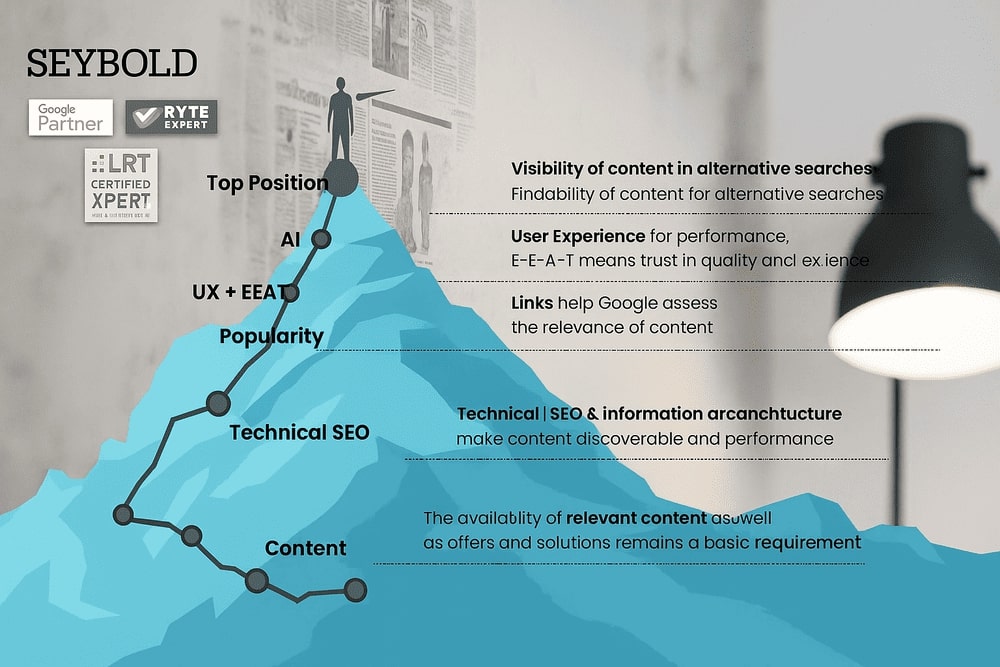
How Ranking Works:
A systematic, data-driven SEO approach is the key to not only achieving short-term ranking success but also building a strong online presence in the long run. By starting with a detailed analysis of your website and competitors, you lay the foundation for targeted optimization measures based on relevant KPIs and Google’s latest requirements.
Developing a tailored content strategy—combined with technical excellence and deliberate authority building through high-quality backlinks—gradually strengthens your visibility and continuously increases organic traffic.
Ongoing monitoring of your SEO performance with tools like Google Search Console, regular analysis of user behavior, and the flexibility to adapt to new trends and algorithm updates secure a lasting competitive edge. By focusing on sustainability and continuous improvement, you can maintain your position in the top ten search results while maximizing the reach and long-term success of your digital brand.
Why do we know exactly how ranking works?
Because we’ve been specializing in ranking optimization since 1998—and as of July 2025, we are ranked the #1 SEO agency in Germany (according to Agenturtipp). Curious what ranking tips looked like until 2024?
FAQ – Frequently Asked Questions
How much does it cost to improve a Google ranking?
The cost of improving your Google ranking can vary greatly depending on the scope of measures and your individual goals. While smaller website projects with targeted SEO adjustments and self-implementation can often start with just a few hundred euros, more comprehensive optimizations for mid-sized companies or highly competitive industries typically require ongoing investments in the four- to five-figure range per year. Budgeting depends on whether you invest your own time and expertise in keyword research, content creation, on-page optimization, and link building, or whether you hire specialized SEO agencies or freelancers who bring additional tools and deep expert knowledge. Typical cost factors include SEO audits, content production, technical optimization, link building, ongoing monitoring with web analytics tools or SEO plugins, as well as training and workshops for your team. Keep in mind that sustainable results usually come from continuous optimization, regular analysis, and adjustments – one-off measures rarely deliver lasting success. Ultimately, professional search engine optimization often pays off through higher visibility, more qualified visitors, and increased sales, making SEO a decisive competitive advantage.
How can I get to the top of Google?
Achieving top positions on Google is the result of a multi-layered SEO strategy that requires both technical excellence and high-quality content tailored to user intent. First, ensure your website is technically sound: fast loading times, mobile optimization, good internal linking, and flawless indexing are essential prerequisites to become relevant to Google. At the same time, continuous content development is crucial – focus on well-researched content that directly addresses the questions, needs, and problems of your target audience while naturally integrating relevant keywords. Develop a sustainable backlink strategy by publishing valuable content that others link to voluntarily, and build authority through organic brand mentions. Regularly analyze your site’s performance with Google Search Console and SEO tools, and adjust your actions accordingly – for example, by optimizing title tags, meta descriptions, and structured data while quickly fixing technical errors. Keep up with SEO trends such as voice search, Google algorithm updates, and changing user behavior to ensure your strategy remains state-of-the-art. Only a methodical, data-driven optimization process that covers all relevant ranking factors and adapts flexibly to changes can secure lasting visibility at the top of Google’s search results.
How can I improve my Google ranking?
Improving your Google ranking sustainably requires a holistic approach that combines technical optimization, high-quality content, and targeted link building. Start with a thorough SEO audit of your site to identify and fix technical issues such as slow load times, indexing errors, poor mobile optimization, or weak internal linking. Alongside this, create relevant, well-structured content tailored to your audience’s search intent, using strategically researched keywords, compelling headlines, and optimized meta data to maximize visibility. Regular monitoring of key metrics with Google Search Console or SEO tools allows you to quickly identify progress and areas for improvement, so you can continuously refine your efforts. Complement your content with high-quality backlinks from authoritative, thematically relevant sites – whether through guest posts, partnerships, or unique value-added content that attracts links naturally. Automated reporting and clear dashboards help measure the effectiveness of your strategy and allocate resources efficiently, while staying up to date with SEO trends and algorithm changes keeps your approach future-proof. Ultimately, the combination of technical excellence, user-focused content, and authority building is the key to improving your Google ranking step by step and attracting more qualified visitors.
How can I optimize my Google ranking?
To effectively optimize your Google ranking, you need to fine-tune multiple levers: technical performance, high-quality content, and strong backlinks. Start with a deep analysis of your current website performance using tools like Google Search Console and Google Analytics to uncover technical errors, indexing issues, or Core Web Vitals deficits – and fix them quickly. Next, focus on improving and updating your content: produce in-depth, user-focused pieces that integrate relevant keywords naturally while providing real value. Structured data, clear headings, and a user-friendly architecture are especially beneficial for SEO. Additionally, ensure optimal internal linking, SEO-friendly URLs, title tags, and meta descriptions to improve both discoverability and click-through rates. Build authority with high-quality backlinks from trustworthy, niche-relevant websites. Monitoring and reporting with professional SEO tools helps track the effectiveness of your optimizations, identify patterns, and adapt your strategy to SEO trends or algorithm updates. A continuous, data-driven optimization process is crucial for long-term ranking improvements and sustainable visibility.
How can I increase my Google rating?
Increasing your Google rating requires a holistic strategy built on technical excellence, strong content, and authority building. Start by optimizing your website’s technical foundations: speed up load times, ensure mobile usability, and make sure all pages are indexable. Publish relevant, well-structured content that meets your audience’s intent and naturally incorporates strategic keywords. Complement this with high-quality backlinks from trusted, niche-relevant websites, as these external endorsements are a major ranking factor. Use tools like Google Search Console to monitor performance, indexing, and errors continuously, and adapt to new algorithm updates promptly. Engage actively with your users by responding quickly to reviews, comments, or on social media to generate positive user signals. With ongoing analysis of KPIs, regular content updates, and continuous authority building, you can gradually raise your Google rating and boost your website’s visibility.
How do I move up on Google?
Moving up in Google’s rankings requires continuous optimization across all SEO areas. Start by improving your technical foundation: fast load times, mobile-friendly design, and a clear internal link structure ensure search engines can crawl and index your content effectively. Create high-quality, fresh, user-oriented content optimized for relevant keywords without overstuffing them. Build domain authority through high-quality backlinks from trusted, relevant sources. Update your meta data regularly—especially title tags and meta descriptions—to increase click-through rates. With tools like Google Search Console and Google Analytics, monitor rankings, spot opportunities, and react quickly to algorithm updates or shifts in user behavior. The best way to climb in the results is by combining technical excellence, consistent content growth, active link building, and agile SEO strategy adjustments.
What influences Google ranking?
Google ranking is influenced by a variety of factors that work together to determine a website’s position in search results. The most important include the quality and relevance of content tailored to user intent, as Google favors pages with helpful, unique information. Technical optimization also plays a major role: fast loading times, mobile-friendly design, clean internal linking, and flawless indexing all improve user experience and are rewarded by search engines. Backlink profiles – the number and quality of links from trustworthy, relevant sites – are central to building authority and visibility. Modern signals like Core Web Vitals, structured data (schema markup), a strong E-E-A-T profile (Expertise, Experience, Authority, Trustworthiness), and an emphasis on user experience are increasingly important in Google’s algorithm. Regularly updated, expert-level content, clear site structures, and adaptation to trends like voice search or AI-driven search ensure future-proof SEO. In short: systematic investment in content quality, technical excellence, authority building, and user focus offers the best chance for top rankings.
How much does Google ranking cost?
The cost of achieving strong Google rankings is highly individual and depends on factors such as industry, competition, current visibility, and available resources. Processes like professional keyword research, competitor analysis, technical SEO, high-quality content creation, and sustainable link building are labor-intensive and usually require ongoing monthly investment. While smaller sites can manage some tasks in-house, mid-size and larger projects often demand a full SEO workflow or collaboration with a specialized agency, driving costs into the four- to five-figure range per year. Typical expenses include SEO tools, audits, content, backlinks, monitoring, and reporting. Ambitious goals such as top-ten rankings for highly competitive keywords generally require continuous budgets to maintain technical excellence, valuable content, and authority-building backlinks. Strategically planned SEO measures tailored to your business model often pay for themselves through greater visibility, qualified traffic, and revenue growth, making SEO one of the most cost-effective digital marketing investments.
Can I change my Google reviews?
Google reviews cannot be directly changed or deleted by businesses, as they reflect user opinions and experiences. If your company receives a negative review, you can respond constructively and publicly, showing potential customers that you value dialogue and professionalism. Reviews that violate Google’s policies – such as those containing insults, spam, or false claims – can be flagged via your Google Business Profile for review and possible removal. Regular monitoring and actively requesting positive feedback from satisfied customers also help improve your overall rating and positively impact your Google ranking. The key is to handle reviews transparently, respond professionally, and demonstrate that you take feedback seriously, strengthening both your reputation and your trustworthiness in search results.
How long does it take to rank on Google?
The time it takes for a new or optimized website to rank on Google varies depending on several factors. Initial visibility changes often occur within days or weeks after publishing new content or implementing technical fixes. However, in competitive markets and for high-volume keywords, it may take three to six months—or longer—to achieve stable first-page rankings. Success depends not only on content quality and relevance but also on technical excellence, domain authority, a natural backlink profile, and consistent adherence to SEO best practices and Google updates. New domains in particular may face a “sandbox” period before being fully trusted by Google. Continuous monitoring with Google Search Console and regular adjustments based on data help accelerate progress. Ultimately, long-term SEO success requires patience and a systematic, holistic optimization process.
How do I get to #1 on Google?
Reaching the #1 spot on Google requires a comprehensive SEO strategy combining technical excellence, high-quality content, strategic keyword optimization, and authority building. First, ensure your website is technically flawless: fast load times, mobile optimization, clean internal linking, and correct indexing for all relevant pages. Next, focus on unique, target-relevant content: thoroughly research your audience’s search intent, integrate keywords naturally, use multimedia elements like graphics and videos, and publish well-structured, regularly updated pages that deliver real value. Strong, natural backlink building is also critical—foster guest posts, partnerships, or PR campaigns that attract high-quality links from trustworthy, relevant websites. Use professional SEO tools like Google Search Console, SEMrush, or Ahrefs to monitor rankings, user behavior, and technical performance, fixing errors quickly and identifying opportunities. Incorporate new SEO trends such as voice search, Core Web Vitals, and E-E-A-T principles into your strategy to stay flexible and resilient. Ultimately, the combination of technical polish, content quality, strategic keywords, effective backlinks, and ongoing monitoring will move you step by step toward the #1 position and sustainable, scalable visibility.
The best tools for Google ranking
To improve your Google rankings effectively, modern SEO tools are indispensable. Leading all-in-one solutions like Dragon Metrics, Semrush, Ahrefs, and SISTRIX provide detailed insights into keywords, competitor rankings, backlinks, and visibility trends. Google’s own free tools—Google Search Console and Google Analytics—are essential for analyzing indexing, user behavior, Core Web Vitals, and technical issues. Specialized crawlers like Screaming Frog, Sitebulb, or Ryte are ideal for technical site analysis, detecting broken links, duplicate content, or meta tag issues. For keyword research and strategy, Google Keyword Planner, AnswerThePublic, and Ubersuggest are great options to discover long-tail queries, search volume, and audience questions. Plugins like Yoast SEO or Rank Math let you manage on-page optimization directly in your CMS with recommendations for metadata, internal linking, and readability. Visualization tools like Google Data Studio help create dashboards to clearly present SEO data to teams and stakeholders. Heatmap and feedback tools such as Hotjar or Microsoft Clarity provide valuable insights into user behavior and highlight where UX improvements may be most effective. Combining these tools—tailored to your site’s needs and goals—gives you comprehensive SEO coverage, supports data-driven strategies, and drives measurable visibility and traffic growth.
Frequently Asked Questions about Google Ranking
How much does it cost to improve a Google ranking?
Costs vary depending on project size and goals. Smaller projects start at a few hundred euros, while extensive efforts in highly competitive markets can reach the four- to five-figure range.
How can I get to the top of Google?
Through technical optimization, high-quality content, strategic link building, and focusing on user intent. Regular analysis and adjustments are essential.
How can you improve your Google ranking?
By analyzing technical weaknesses, creating targeted content, optimizing meta data, building high-quality backlinks, and continuously monitoring with SEO tools.
How can I optimize my Google ranking?
Focus on technical excellence, relevant content, structured internal linking, and regular updates. Use tools like Google Search Console to track performance.
How do I increase my Google rating?
Improve your website’s technical setup, content, and authority. Encourage positive user experiences and collect reviews through active reputation management.
How can I move up higher on Google?
By technically optimizing your website, providing high-quality content for relevant search queries, and consistently building backlinks from trusted sites.
What influences Google ranking?
Ranking factors include content quality, technical SEO, mobile optimization, loading speed, backlinks, user behavior, and E-E-A-T (Experience, Expertise, Authority, Trust).
What does Google ranking cost?
Costs depend on the level of effort – from do-it-yourself SEO to professional agency support with analysis, content production, and link building.
Can I change my Google reviews?
No, but you can report unfair reviews and respond to customer feedback. More positive reviews will help improve your overall rating in the long term.
How long does it take to achieve a Google ranking?
Initial effects may be visible after a few weeks, depending on competition. Stable rankings usually require 3–6 months of consistent optimization.
How do I get to number 1 on Google?
Through strategic SEO: a technically clean website, relevant content with real value, strong backlinks, and consistent alignment with user intent and Google guidelines.
| Section | schema.org Type | Property | Example Value |
|---|---|---|---|
| Title & Metadata | WebPage | name, headline, description, datePublished, author | Improve Google Ranking: SEO Tips and Strategies, 2025-08-01, Ralf Seybold |
| Content Focus | Article | articleBody | Strategies to improve Google rankings through data-driven optimization, content, technical SEO, and links |
| Search Intent & Content | FAQPage | mainEntity → Question → acceptedAnswer | How can I improve my Google ranking? |
| E-E-A-T & Authority | Organization | name, founder, sameAs, logo | SEYBOLD AGENCY, Ralf Seybold |
| Core Web Vitals | WebPageElement | measurementTechnique, accessibilityFeature | LCP, FID, CLS optimization techniques |
| Backlinks & Reputation | CreativeWork | citation | External references from industry sources, brand mentions |
| Local SEO | LocalBusiness | address, geo, openingHoursSpecification | NAP data, location data, opening hours |
| Structured Data | Dataset or WebPageElement | encodingFormat, about | Schema.org markup for products, articles, organization |
| Monitoring & Analytics | Dataset | measurementMethod, temporalCoverage | Google Search Console data, 2025-01 to 2025-08 |