How to Identify and Fix Google Penalties
Check for manual actions in Google Search Console, fix the affected URLs, and request a review with complete supporting evidence. Read the SEYBOLD guide now.
Toxic backlinks, unnatural linking structures, and historical baggage can
seriously damage your rankings in a short time – often unnoticed, until it's too late.
A link profile that's grown uncontrolled over the years almost always carries risks: links from topically irrelevant sites, links left over from old link networks built by previous SEO campaigns, or automatically generated spam links.
The dangerous part: these risks aren't visible from the outside. No visitor ever sees a website's link profile. But Google does — and re-evaluates it with every crawl cycle. An algorithm update, a manual review, or a sudden cluster of new toxic links can cause rankings that have been stable for years to drop significantly within just a few weeks. By the time you react, you've already lost valuable visibility.
For companies that are already investing — or have invested — in SEO, Link Risk Management protects that investment. Anyone who creates good content and has a technically clean setup, but loses sight of their link profile, risks getting penalized. Link Risk Management closes that gap: permanently, systematically, and backed by over 25 years of experience handling complex link profiles.
Toxic, unnatural, or manipulative links are identified, evaluated, and neutralized in a targeted way - before they trigger ranking losses or a manual Google penalty.
You get a transparent, traceable assessment of your entire link profile - not an automatically generated tool report, but a manually reviewed risk analysis with real substance.
A continuously monitored link profile protects your rankings from unexpected penalties and ensures backlinks work as they're supposed to: a positive ranking factor.
Knowing where your link profile truly stands lets you plan SEO measures more precisely - and avoid optimizing in areas that link risks would hold back anyway.
Most companies have no idea what's actually in their link profile – and that's the real problem.
An online store that hired a cut-rate SEO agency five years ago discovers today that hundreds of links from link farms and topically irrelevant sites point to its domain – built back then, toxic now. A manufacturing company loses 35 percent of its organic traffic within a few weeks after a Google core update – not because of weak content, but because a historically grown link profile full of outdated directory listings and auto-generated links tips the scales. A mid-sized service provider falls victim to a negative SEO attack: a competitor deliberately builds spam links pointing to the domain – unnoticed, until rankings collapse.
What all three cases have in common: they could have been avoided with consistent Link Risk Management. The risks were foreseeable before the damage occurred. They simply went undetected because no one was looking.
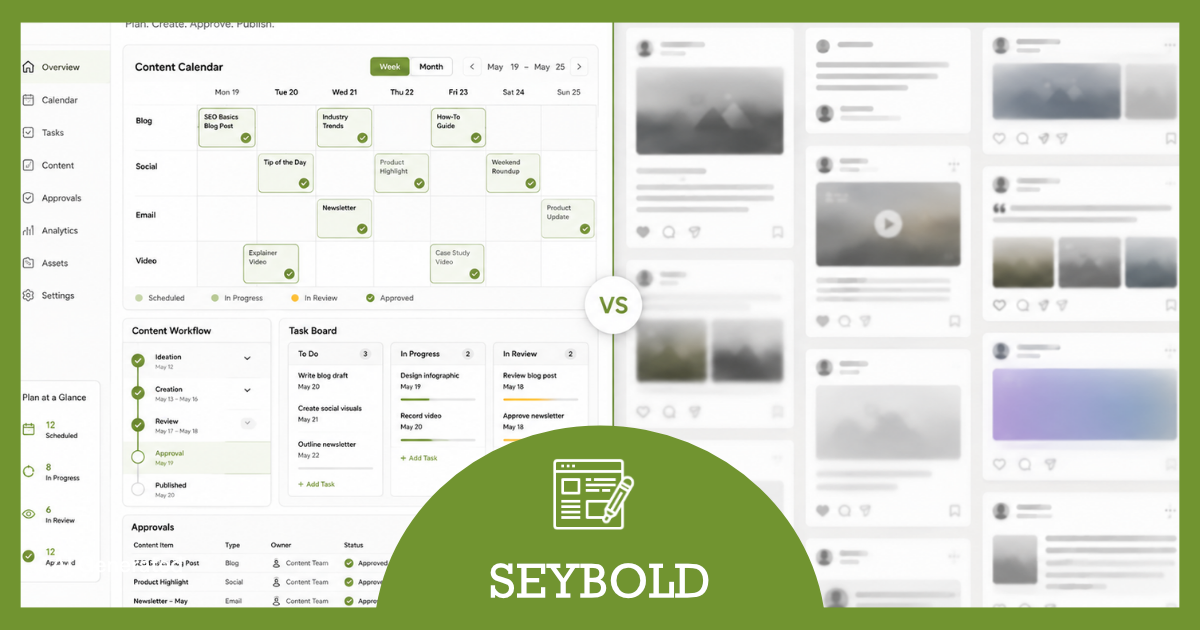
| Without Link Risk Management | With Link Risk Management · SEYBOLD |
|---|---|
| Toxic links go undetected and send negative signals to Google | Complete analysis and evaluation of all relevant backlinks |
| Google penalties hit unprepared and cause maximum damage | Proactive risk detection and cleanup - before Google reacts |
| Old SEO campaigns leave lasting damage in the link profile | Targeted cleanup of historical baggage via disavow and direct outreach |
| No overview of who links to the website - or with what intent | Transparent, continuously updated overview of the entire link profile |
| Negative SEO attacks from competitors go unnoticed for a long time | We detect spam attacks early and act immediately |
| Ranking losses only get noticed once the damage has already happened | Monitoring prevents new toxic links from causing damage |
| SEO investments get permanently held back by link risks | A stable link foundation that lets every measure achieve its full impact |
A strategy connects all levers into one plan. Which approach fits your company depends on your starting point and your goals.
Link Risk Management isn't a one-off check, but a structured process. The following services form the foundation for a controlled, stable link profile.
Comprehensive analysis of all relevant backlinks, including evaluation of quality, relevance, and risk potential - manually reviewed, not just tool-based.
Detection of unnatural, harmful, or outdated links with potential impact on visibility - including spam patterns, PBNs, and manipulative anchor text structures.
Clear, prioritized recommendations for handling identified risks - presented in plain language for marketing and IT, sorted by impact and implementation effort.
Continuous tracking of the link profile to catch new risks early - so cleanups already achieved aren't undermined by new toxic links.
Strategy. Growth. Visibility.
No visitor ever sees a website's link profile – but Google does, and re-evaluates it with every crawl cycle. Toxic links, old SEO campaigns, or a negative SEO attack from a competitor often go unnoticed until rankings collapse within a matter of weeks. By the time you react, you've already lost valuable visibility.
We manually identify and evaluate your entire link profile, clean up historical legacy issues through disavow and direct outreach, and continuously monitor so new risks don't go undetected.
Do you actually know what's in your link profile? Let's find out together – before Google does.
Link Risk Management
Catch harmful links early and act before your rankings collapse. We review your link profile regularly and proactively, flag toxic backlinks, and disavow potentially harmful links through Google's Disavow Tool - so a penalty never happens in the first place.
Assess your link riskRemoving Bad Links
Received a Google penalty? Losing valuable rankings and not sure why? We analyze your entire link profile, identify the causes, and systematically remove harmful links - so you regain the visibility you lost.
Request a link audit"I wouldn't have thought a strategic approach could bring about so much change and such positive results for our visibility. With Ralf Seybold's team, we reworked our website with tremendous impact. Both new customer inquiries and booking volume have increased significantly."

"Ralf Seybold supported us exactly where we needed help — something no other SEO agency had managed before! We're very satisfied with the fast and professional service. I'd definitely recommend this SEO agency to anyone!"

"As co-founder of mydays and myobis, I can wholeheartedly recommend him based on a wide range of successful projects — someone who always thinks in the customer's interest is truly invaluable!"

Here you'll find answers to the key questions around Link Risk Management and the requirements and conditions that come with it.
Link Risk Management involves the analysis, evaluation, and continuous monitoring of a backlink profile to prevent SEO risks caused by problematic backlinks.
Toxic backlinks are links that Google classifies as unnatural, manipulative, or low-quality—for example, links from link farms, private blog networks (PBNs), topically irrelevant spam websites, or sites with automatically generated content. An unnaturally high proportion of exact-match anchor texts can also be considered a risk signal.
In the best-case scenario, nothing happens in the short term. In the worst-case scenario, an accumulation of toxic links can lead to an algorithm-related ranking decline or—if Google conducts a manual review—to a direct penalty that is difficult and time-consuming to reverse. The longer link risks are ignored, the greater the potential damage becomes.
It depends on the size, competitiveness, and history of the website. As a general rule, a backlink profile should be reviewed regularly at defined intervals.
No. In fact, Link Risk Management is particularly valuable as a preventive measure, helping to identify risks early and avoid negative developments before they impact your website.
Yes. Smaller websites can also be affected by problematic link structures—especially when they have backlink profiles that have developed over time.
The Disavow Tool allows website owners to signal to Google that certain backlinks should not be taken into account when evaluating their website. It is used when problematic links cannot be removed through direct contact with the linking website owner. Using the Disavow Tool requires careful analysis—if applied incorrectly, it can also devalue valuable backlinks.
A free initial analysis with a personal conversation – no obligation, but honest. In 30 minutes you'll know where you stand.
✓ Free & no obligation · ✓ Response within 24h · ✓ No contract required