Content Spam Detection - Identifying Content Theft
Content spam, negative SEO, and poor reviews share a commonality – they are harmful to website operators. They can result in a drop in Google rankings, links to pornographic websites, and loss of customer trust. No website operator wants this because it could ultimately lead to exclusion from search engine indexes.
Our Defense Strategy in Visibility Management fights against this to minimize or prevent such damage.
Why does content spamming and content theft work?
Every website needs good content to rank highly in search engine results. A website without good content will struggle to achieve a good ranking. Webmasters with good content understand the effort involved. Content, especially informative content aimed at conversions, requires comprehensive and holistic creation.
However, online shops often have short, non-individualized text. Content spam is more common in shops where content production is low, and blog posts are scarce.
Some spammers use existing texts and automatically rewrite them with tools to reuse them. Google detects low-quality texts, and such pages can affect other websites if their content is similar. Legal action is often not possible because content theft falls outside copyright law due to the brevity of the text passages, unless trademark rights are violated.
For spammers using good content to link to dating, casino, or other adult sites, the actual text is less critical. The goal is to copy content from well-ranking sites to promote spam offerings.
Spammers steal and copy content wherever possible, including forums and guestbooks. The content's substance is irrelevant to spammers, who use programs to randomly select text.
Content spam is easily identifiable on the web because:
- It only serves as context for advertising (or a lead gen form) – OR
- It only serves as context for one or more ad links – OR
- It serves as a placeholder while trying to generate traffic
Spam Measures
– Repeating keywords to pretend high relevance. These keyword accumulations are usually in areas invisible to users.
– Keywords can be hidden by matching their font color to the background. The same method hides word groups that attract users to visit the page.
– Keywords can also be placed in image ALT texts to attract visitors through image search.
How to identify content spam / content theft?
A good way to identify content theft is by using a tool like Copyscape to list matches. This can be done by anyone (we have additional systems for deeper and more detailed content theft analysis).
Copyscape
Use Copyscape to find out if your website is affected by content spam.
Steps:
- Search for CopyScape on the web.
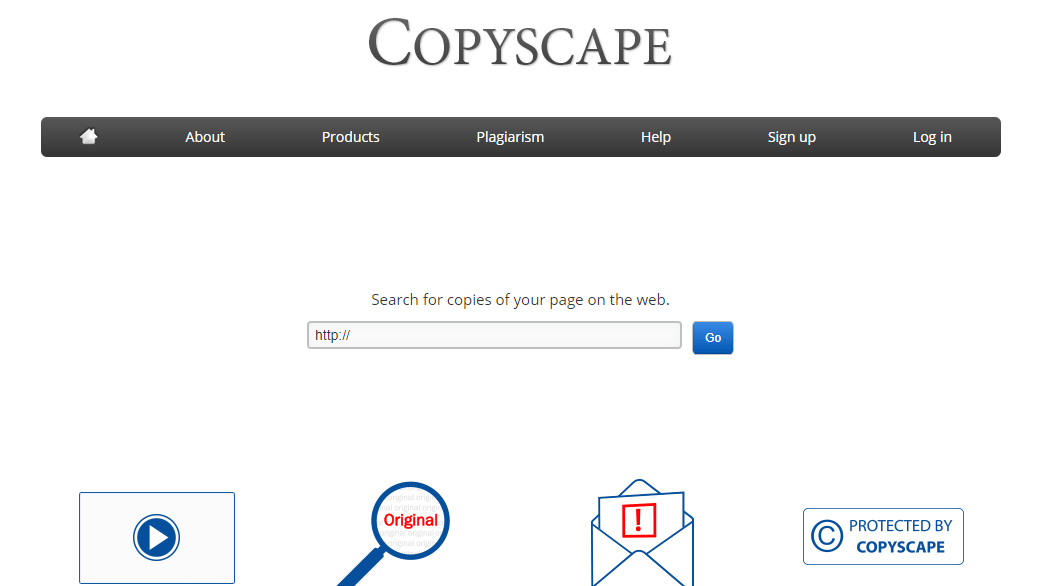
2. Enter your URL and click on "Go"
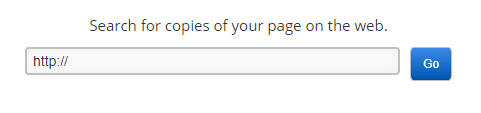
3. Result
Ideally, no results should appear, like this:

If content spam is detected, you will be shown the top 10 results of suspected duplicated content.

Content spam is one of the most effective spam methods and can be particularly annoying for website owners. However, there are ways to protect your own content, such as using Content Delivery Networks (CDNs) like Cloudflare.
What should you do if you discover content spam?
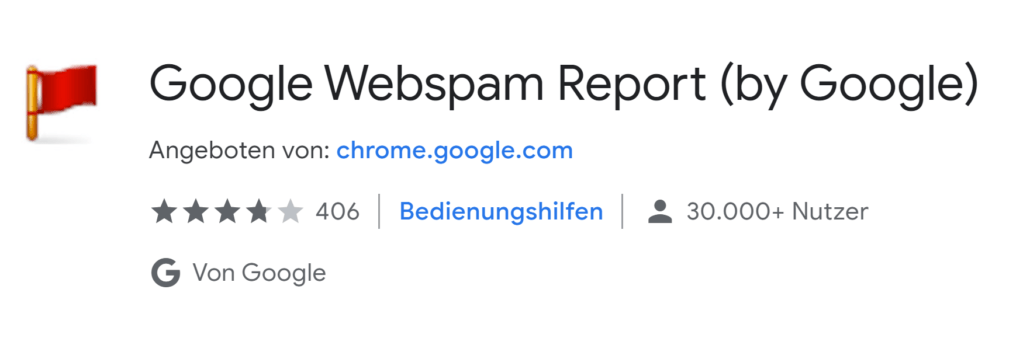
If such content is found, it can be appropriately removed using Google's spam report.
Discovering Content Spam with Semrush
With the SEMrush tool, you can also uncover web spam. To do this, use the SEO Writing Assistant tool within the "Content Marketing Dashboard".
Using the SEO Writing Assistant feature, you can check the originality of content. SEMrush can detect various types of content spam using this tool.
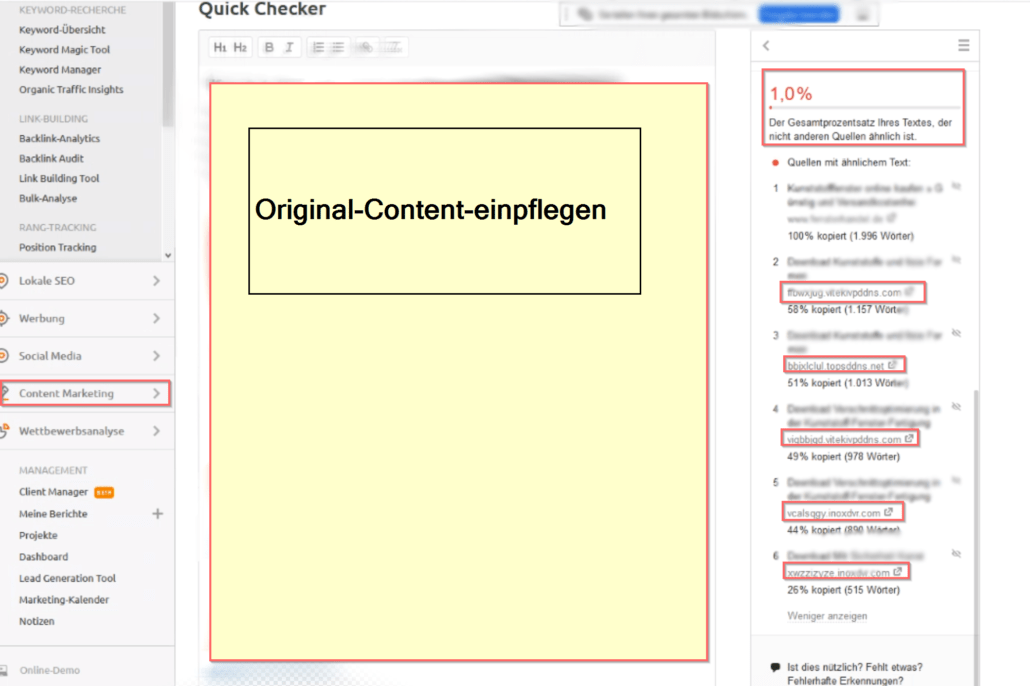
Through this feature, an existing text can be checked for originality. The originality check will then indicate how unique the text is. In this case, the original text is found to be 1.0% unique, meaning that the content is used on other websites.
This reuse makes the original text less valuable.
The listed pages serve as references to special pages.
The example illustrates the moment when it is realized that the substantial ranking losses are due to stolen content.
Indeed, content spam attacks are associated with Negative SEO.
By the way: Another popular method to discredit a company is through the use of negative or false reviews (fake reviews) or Negative SEO.
If you suspect that your content is being used elsewhere, feel free to contact us.
Try Semrush for Free for 14 Days
FAQs
How do you determine if you've been affected by content spam?
A great way to detect content theft is by using a tool like Copyscape to list where matches exist. This is something anyone can do on a basic level (we also have additional systems available that can analyze content theft even more deeply and accurately).
Why does content spamming and content theft work?
Every website needs good content to be listed high in search engine results. A website without good content will struggle to achieve a good ranking in search results. Webmasters who have good content know how much work is involved. Especially informative content that is intended to lead to a transaction is written very holistically and extensively.
It's different in online shops. The texts there are often very short and not really individual. Content spam is more common in shops. Often, little content is produced in shops, and blog posts are often scarce.
What types of content spam exist?
- Keyword repetition, where keywords are repeated frequently on the page to pretend a high relevance of the terms. This accumulation of relevant keywords is usually located in page areas not visible to users.
- Keywords can be hidden by matching their font color to the background. The same method is also used to hide word groups that are not relevant to the page but are intended to attract users to visit the site.
- Keywords can also be placed in ALT texts of images. This way, they attract attention to the site through image searches.
What should you do if you discover content spam?
If such content is found, it can also be appropriately removed. This is where Google's spam report comes into play.